GPR vs X-ray scanning comes down to access and detail: GPR scans one side of a slab in real time, radiation-free, while X-ray needs both sides and controlled conditions for higher-detail images. Utility locating maps buried services below grade. Our GPR and NDT scanning crews pick the right one before any cut.
GPR concrete scanning: the everyday standard
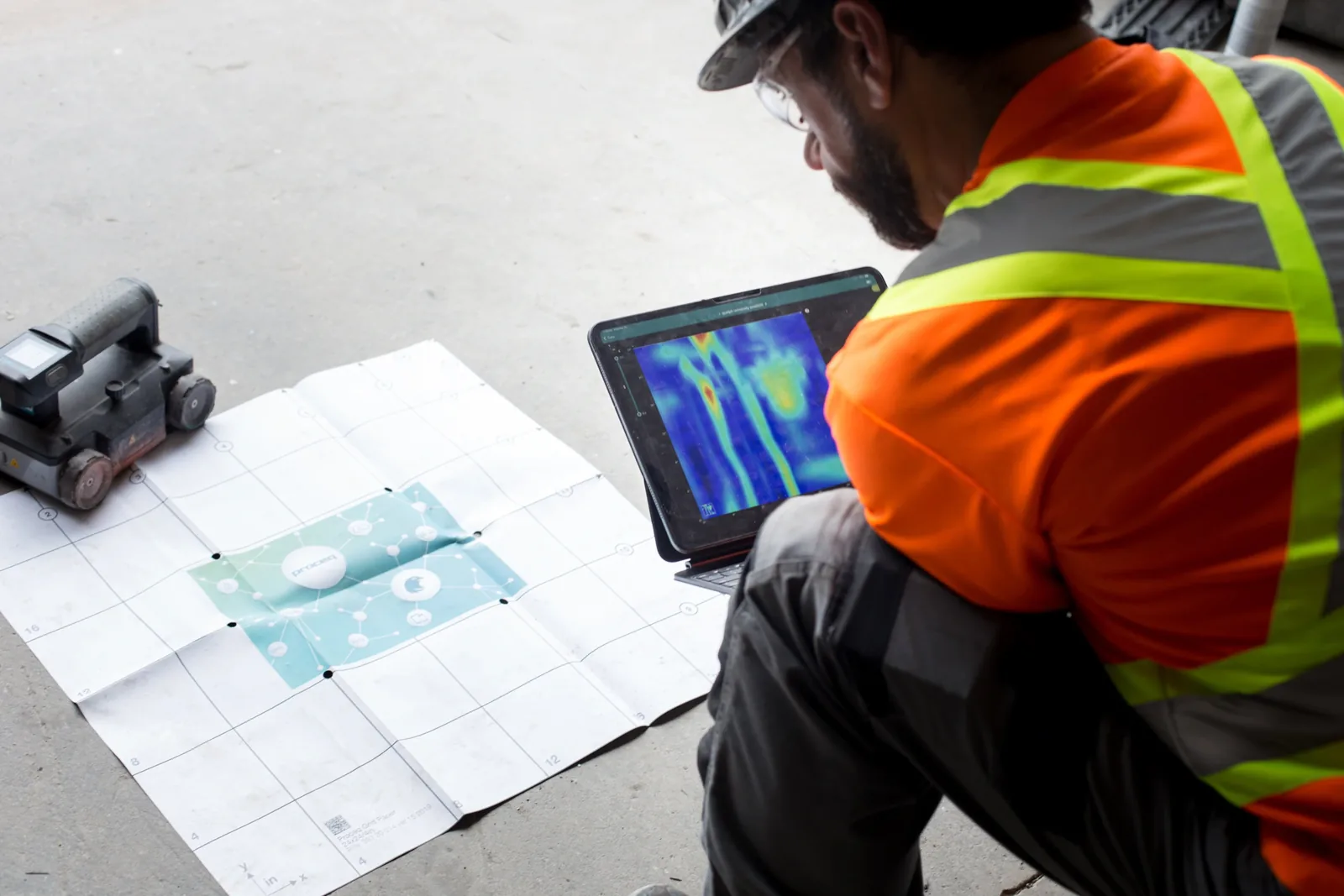
Ground-penetrating radar is the go-to for most jobs. A single-sided, non-destructive scan locates rebar, post-tension cables, conduit and voids in real time, and produces a documented report. Because it only needs access to one face of the slab and emits no radiation, GPR concrete scanning works in occupied buildings with no site shutdown — which is why it’s the first step on most of our cuts.
Concrete X-ray: high-detail imaging
For a drawing-grade image of a specific, congested area, concrete X-ray imaging can capture fine detail. It requires access to both sides of the element and controlled site conditions, so it’s used selectively where GPR alone isn’t enough.
Utility locating: what’s buried below grade
Before you excavate or core into a ground-bearing slab, utility locating maps buried services — power, water, gas, telecom — so digging and drilling stay clear of them.
Scan first, cut once
The common thread: locate, document, then cut. Federal, institutional and engineering clients increasingly require a scan report on file before any penetration is approved — exactly what GPR delivers. We provide scanning on projects across the province, including Ottawa and the other areas we serve. Request a free quote.
Concrete Services Across Ontario
Concrete Drilling & Sawing Ltd. is based in Hamilton and has served projects across Ontario since 1967. We mobilize crews province-wide — see all the areas we serve, including concrete contractor service in Peel Region, Hamilton and Toronto.
More in this series: How to Read a GPR Scan Report Before Cutting Concrete
Frequently Asked Questions
Is GPR concrete scanning safe in an occupied building?
Yes. GPR emits no radiation and needs access to only one side of the slab, so it can be done with people working nearby and no site shutdown.
What’s the difference between GPR and concrete X-ray?
GPR is single-sided, real-time and radiation-free — ideal for everyday scanning. X-ray gives higher-detail images but needs access to both sides and controlled conditions, so it’s used selectively.
Do you provide a scan report?
Yes. Our GPR/NDT scanning produces a detailed client report identifying rebar, post-tension cables, conduit and voids — the documentation institutional and federal projects expect before cutting.