A GPR scan report maps what’s hidden inside a slab: the location and depth of rebar, post-tension cables, conduit and voids, plus slab thickness. Findings are marked on the concrete in colour-coded paint and backed by a written record with images, depths and notes. Our GPR scanning crews mark the slab on site and deliver the written report.
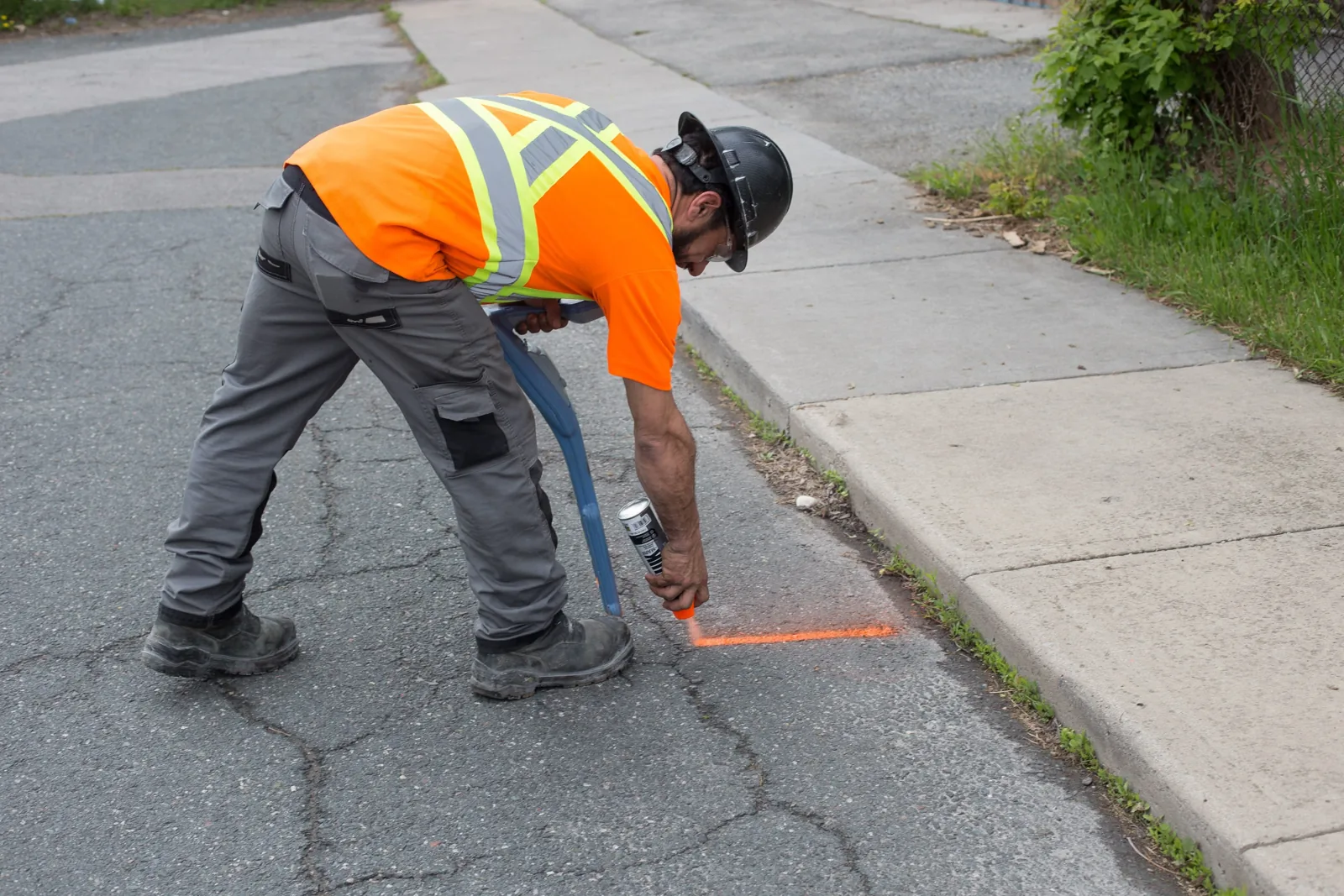
What a GPR scan report shows
A typical GPR scan report identifies the location and depth of:
- Rebar — the reinforcing grid, usually the densest set of signals.
- Post-tension cables — high-stakes to avoid; cutting one is dangerous and costly.
- Conduit — embedded electrical and data runs.
- Voids and slab thickness — useful for coring depth and structural assessment.
On-slab markings vs the written record
On site, findings are marked directly on the concrete with colour-coded paint or crayon so crews see the no-cut zones in real time. The written GPR scan report backs that up with images, depths and notes — the record engineers and project managers keep on file and submit for approval.
Using the report to plan the cut
With the report in hand, you can shift a core a few inches to clear a tendon, choose a cut line between rebar, or confirm there’s enough cover to drill safely. That’s the whole point of scan-before-cut: decisions backed by data, not assumptions. Pair scanning with utility locating when excavation is involved.
We deliver scan reports on projects across Ontario, from institutional work in Ottawa to the other regions we serve. Request a free quote for your next scan.
Concrete Services Across Ontario
Concrete Drilling & Sawing Ltd. is based in Hamilton and has served projects across Ontario since 1967. We mobilize crews province-wide — see all the areas we serve, including concrete contractor service in Ottawa, London and Windsor.
Related guides in this cluster: Why Scan Before You Cut
Frequently Asked Questions
What does a GPR scan report include?
It identifies the location and depth of rebar, post-tension cables, conduit and voids, along with slab thickness where relevant — plus on-slab markings and a written record for your files.
Can a GPR scan tell me how deep the rebar is?
Yes. GPR estimates the depth (cover) of reinforcement and embedded items, which helps plan safe coring and cutting.
Who needs the written scan report?
Engineers, project managers and building owners — especially on federal and institutional projects where a documented scan must be on file before any penetration is approved.