Core drilling hole sizes typically run 1″–4″ for electrical conduit, 2″–6″ for plumbing lines, 4″–12″ or larger for HVAC ducting, and 2″–5″ for sprinkler penetrations. Openings bigger than a single bit call for stitch-drilling or sawing. Our concrete coring crews scan first, then drill clean, accurate holes through floors and walls across Ontario.
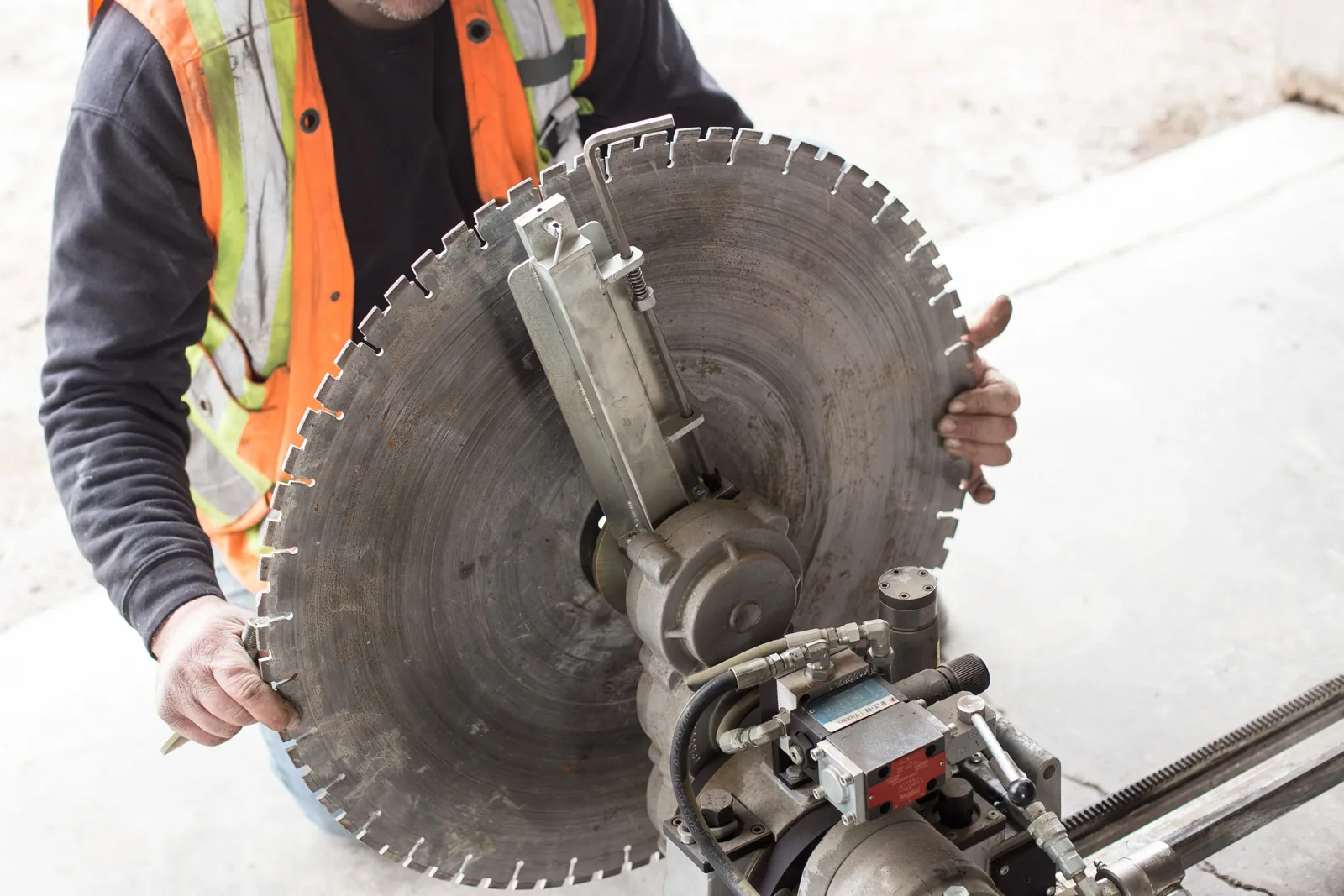
Common core drilling hole sizes by trade
Diamond core bits come in a wide range of diameters. As a rough guide to typical core drilling hole sizes:
- Electrical: 1″–4″ for conduit runs and cable penetrations.
- Plumbing: 2″–6″ for supply, waste and vent lines.
- HVAC: 4″–12″+ for ducting, refrigerant lines and condensate.
- Sprinkler / fire protection: 2″–5″ for branch and riser penetrations.
- Large openings: cores beyond 12″ — or stitch-drilling and sawing for openings bigger than a single bit.
Why clean cores beat rough breaking
A diamond-drilled core leaves a smooth, round, correctly-sized hole that seals and fire-stops properly and passes inspection the first time. Hammering or chipping leaves a ragged edge, cracks the surrounding slab, and often means re-work. Clean coring also limits dust and vibration — important in occupied buildings.
Scan first, then core
Before we drill, we scan the slab with GPR to locate rebar, post-tension cables and embedded conduit. Hitting a tendon in a post-tensioned deck is dangerous and expensive; scanning means the hole lands where the drawings say it should. We handle coring on projects from Toronto high-rises to Peel Region warehouses — see all our service areas.
Have a penetration schedule to price? Request a free quote.
Concrete Services Across Ontario
Concrete Drilling & Sawing Ltd. is based in Hamilton and has served projects across Ontario since 1967. We mobilize crews province-wide — see all the areas we serve, including concrete contractor service in Ottawa, Windsor and Kitchener.
More in this series: Concrete Drilling vs Core Drilling
Frequently Asked Questions
What is the most common core drilling hole size?
It depends on the trade — electrical conduit cores are often 1″–4″, plumbing 2″–6″, and HVAC 4″–12″ or larger. We carry bits across that full range.
Can you core drill a post-tensioned slab?
Yes, but only after GPR scanning to locate the post-tension cables. Cutting a tendon is hazardous, so scan-before-cut is mandatory on PT decks.
Do you core drill through walls as well as floors?
Yes. We core horizontally through walls and vertically through floors and ceilings for electrical, plumbing, HVAC and sprinkler penetrations.