The three main concrete cutting methods are slab sawing for horizontal surfaces like floors, pavements and bridge decks; wall sawing for vertical or angled openings; and wire sawing for very thick or heavily reinforced sections. Concrete Drilling & Sawing Ltd. runs all three from our Hamilton shop, and we scan the concrete first to map rebar and post-tension cables.
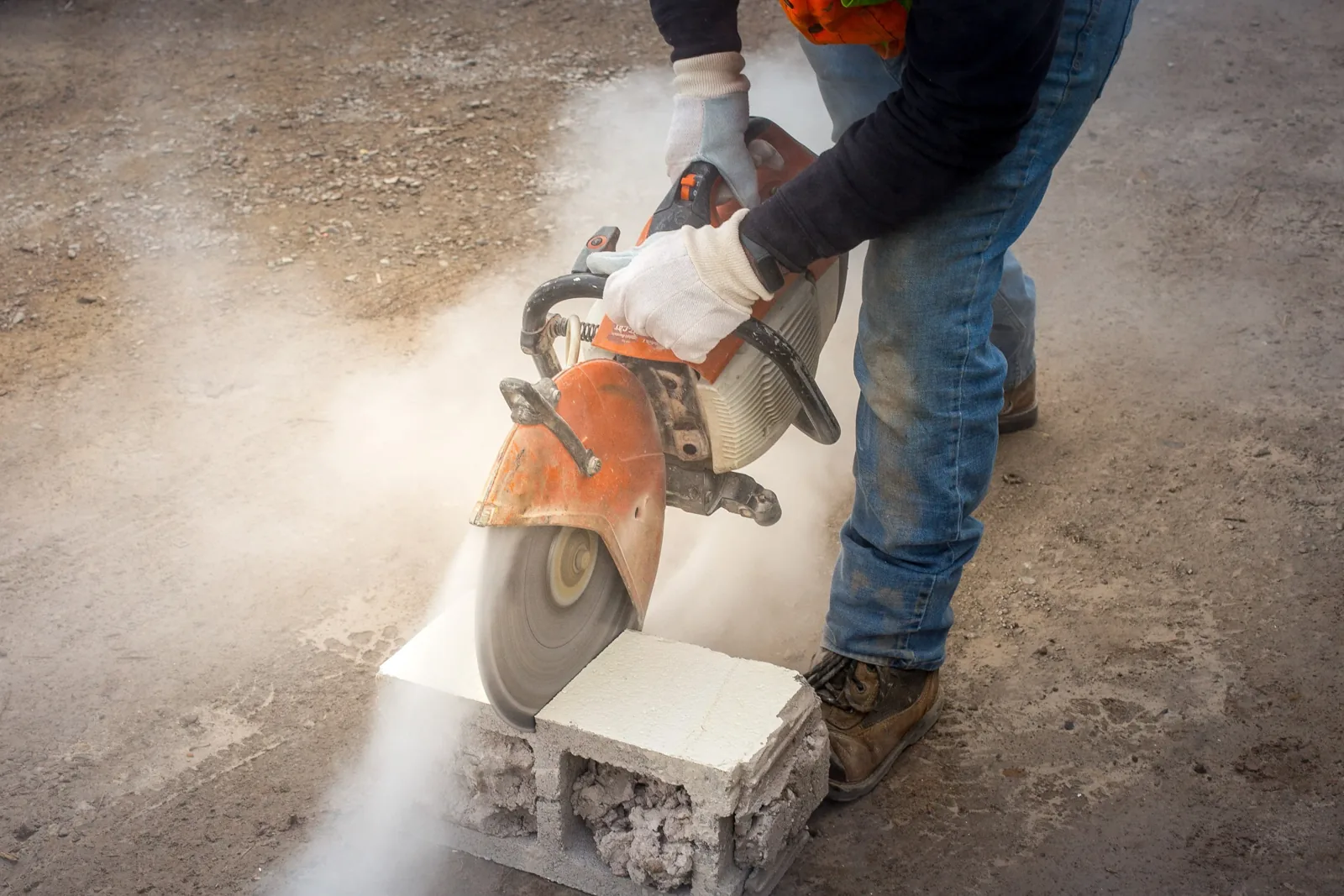
Slab sawing: flat, horizontal cuts
Slab sawing (floor sawing) is the workhorse for horizontal surfaces — floors, pavements, bridge decks and trenches. A walk-behind saw with a diamond blade scores straight, controlled lines for removal, expansion joints or trenching. We run two kinds: diesel saws for fast cutting on outdoor or well-ventilated sites, and electric saws for indoor and occupied buildings where exhaust isn’t an option. See our saw cutting page for details.
Wall sawing: vertical and angled cuts
When the cut is on a wall or a steep incline, a track-mounted wall saw takes over. It’s the method for creating door, window and equipment openings, stair shafts, and precise demolition cuts in elevated structures. We run both hydraulic and electric wall saws, which handle up to roughly 24 inches in a single pass. Wall sawing pairs naturally with concrete demolition when a section has to come out cleanly.
Wire sawing: thick, awkward and steel-laced concrete
For very thick sections, heavily reinforced concrete, embedded steel, or shapes a blade simply can’t reach, a diamond wire saw is the answer. A looped diamond cable is fed around the element and pulled through — there’s effectively no thickness limit, which is why wire sawing handles bridge piers, dam sections and massive industrial structures. It’s also the quietest, lowest-vibration option, useful next to sensitive equipment.
Which concrete cutting method should you use?
A quick rule of thumb: horizontal surface, use a slab saw; vertical opening, use a wall saw; thick, reinforced or hard-to-reach, use wire. On real jobs we often combine them, and we always scan the concrete first to map rebar and post-tension cables before any blade goes in. We bring these methods to projects across Ontario — see the areas we serve, from Hamilton to Toronto.
Not sure which method your project needs? Request a free quote and we’ll spec it for you.
Concrete Services Across Ontario
Concrete Drilling & Sawing Ltd. is based in Hamilton and has served projects across Ontario since 1967. We mobilize crews province-wide — see all the areas we serve, including concrete contractor service in Hamilton, Toronto and London.
More in this series: Diesel vs Electric Concrete Sawing · Concrete Cutting for ICI Construction in the GTA
Frequently Asked Questions
How thick can concrete cutting go?
Slab and wall saws typically cut up to about 24 inches in a single pass. Wire sawing has effectively no thickness limit — it handles bridge piers and dam sections several feet thick.
Which concrete cutting method is best indoors?
Electric slab and wall sawing are best for occupied or indoor sites because they produce no exhaust. Paired with water suppression and slurry control, they keep interior cuts clean enough for hospitals, food plants and retail spaces.
Do you scan before cutting concrete?
Yes. Scan-before-cut is standard practice. GPR scanning maps rebar, post-tension cables and conduit so the cut avoids them — protecting the structure and the schedule.